“
We were able to get someone out very quickly. Our tech did an awesome job — very courteous and professional.
SM
Susan M.★★★★★ · Google


A noisy garage door usually means worn rollers, dry hinges, loose hardware, or a door that's out of balance.
A noisy garage door is signaling worn rollers, dry hinges, loose hardware, or a balance problem—and the sound tells you which. A grinding or gravelly scrape during travel is worn rollers: ball bearings worn out and dragging against the steel track. A persistent rattle or room-shake means loose hardware—bolts back out after thousands of cycles. A high-pitched squeal on every trip is dry hinges or bearing plates starved of lubrication. A loud bang at the top or bottom of travel means the door is out of balance or the travel limit is set wrong. All four are fixable with a professional tune-up: new sealed nylon rollers, a proper garage-door lubricant on hinges and springs, hardware tightened, balance corrected, and a 30-point safety check. Kansas City's 40-degree temperature swings—common October through March—dry out lubricant faster than most climates and fatigue hardware that's already stressed. Garage Door Masters KC, Olathe-based, covers the full KC metro same-day. The $79 service call goes toward the tune-up, and most noise problems are resolved in one visit.
Grinding, rattling, banging or squealing as the door moves; the whole door shakes or the room above it rumbles.
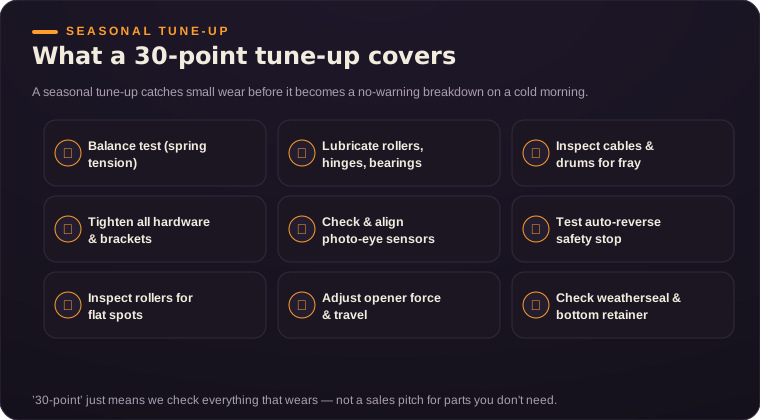
We replace worn rollers, lube and adjust the hardware, tighten everything, and rebalance the door — plus a 30-point safety check. Most homeowners are amazed how quiet it gets.
Our service call is $79 and goes toward the job if we do the work the same day — and the price we quote is the price you pay. A real local tech comes out, often the same day, with the common parts already on the truck.
Very timely service. Highly professional work by our technician.
Wound steel above the door that stores the energy to lift it. A standard spring is rated about 10,000 cycles (7–10 years); we install high-cycle springs up to 80,000.
The type of noise is your first diagnostic clue. Match your sound:
Not all garage door noise means the same thing, and the type of sound is your first diagnostic clue. A grinding or gravelly scrape as the door moves is almost always rollers. The rollers are the wheels that ride inside the vertical and horizontal tracks, and when the ball bearings inside them wear out — or when a plastic roller cracks and starts dragging — the contact with the steel track produces exactly that low, rough grinding. If the grinding is most pronounced during the first few feet of travel in the morning, the rollers are especially stressed by the cold contraction of the track metal overnight.
A persistent rattling or vibrating — sometimes described as the whole room above the garage shaking — usually points to loose hardware rather than worn rollers. Garage doors run through thousands of open-close cycles, and the vibration gradually backs out nuts, bolts and lag screws. The track brackets, hinge plates, bottom fixtures and spring anchor bracket are the usual culprits. A bolt that has backed out a quarter-turn creates a rattling panel resonance that can sound like something is seriously wrong when it is actually a five-minute fix with the right wrench.
A high-pitched squeal on every trip is almost always dry metal-on-metal contact at the hinges or at the bearing plates that support the spring tube. Hinges have a steel pivot pin riding in a steel socket, and when the lubricant film dries out — which happens naturally over one to two years, and faster in the dry KC winters — the pin squeals every time it rotates. Bearing plates at the top corners of the door have roller bearings inside them; when those dry out the squeal is continuous through the full travel arc.
A sharp bang or thud when the door reaches the top or bottom of travel is usually a balance or limit-setting issue. A door that is out of balance — either too heavy on one side, or with springs that have lost tension — hits the opener's up-stop hard instead of decelerating gently. The impact reverberates through the whole structure. A thud at the bottom means the down-travel limit is set slightly long and the door is slamming the floor sill. Either one stresses the opener's drive gear over time, so a loud stop is worth fixing before it turns into an opener repair.
Most residential garage doors come from the factory with nylon or low-grade steel rollers that are adequate for a few years but are not built for the long haul. The original factory rollers on many doors have plastic stems, small ball-bearing counts — often just 10 balls — and no seals to keep debris and moisture out of the bearing race. Over time the balls wear grooves in the race, the bearing starts to wobble, and the roller no longer rolls cleanly — it grinds and skips along the track. At this point the door is still functional but the noise is significant and the wear on the track itself is accelerating.
The upgrade path is sealed nylon rollers with a steel stem and 13 or more ball bearings. These rollers have a nylon wheel — softer than steel, so they run quieter — and sealed bearings that keep the lubricant in and dust out. The difference in noise level between a stock plastic roller and a sealed nylon bearing roller is dramatic; most homeowners who have never had the rollers replaced on a 10-year-old door are genuinely surprised at how quiet the door becomes. Sealed nylon rollers are also rated to 20,000 to 50,000 cycles, meaning they typically outlast two or three sets of the factory originals.
A standard residential door has 10 to 12 rollers: two per horizontal track section and four to six along the vertical track on each side, depending on the panel count and door height. When we replace rollers, we do the full set — not just the ones that sound worst. Replacing half the rollers leaves you with a door that will be noisy again in a year when the other half wear through. We also inspect the track at the same time for dents, bends or worn sections, because a damaged track will wear new rollers prematurely no matter how good they are.
One important note on steel rollers: some aftermarket steel rollers are louder than original equipment because they ride with steel-on-steel contact against the steel track. If you have steel rollers and a grinding noise, the fix may be replacing them with nylon rather than just re-lubricating — adding grease to a worn steel roller on a steel track does quiet it temporarily, but it also attracts dirt and grit that accelerates wear. Sealed nylon does not require track lubrication, which keeps the track cleaner over the long run.
Lubrication is the single most cost-effective maintenance step a homeowner can take, and the most commonly done wrong. The right lubricant for garage door hardware is a purpose-made silicone garage door lubricant. These products cling to metal, resist being flung off during operation, and do not attract grit the way thinner oils do. Do not use WD-40 on garage door hardware. WD-40 is a penetrating oil and moisture displacer, not a long-term lubricant — it cleans and loosens, which is useful for a rusted bolt, but it evaporates quickly and leaves the metal dry and sometimes stickier than before, which accelerates wear.
Where to apply lubricant: the torsion springs (a light coat along the full length of the coils), the hinge pivot pins (a squirt into the gap where the pin meets the socket on each of the door's hinges), the roller stems where they pass through the hinge (not on the nylon wheel itself — the wheel runs on the track without lubricant), the bearing plates at the top corners of the door (a small amount into the bearing opening), and the top of the door's lift cables where they wrap the drum. Do not lubricate the track. Many homeowners spray the inside of the track thinking the rollers need a slick surface, but a greasy track collects debris and causes the rollers to skid rather than roll, which makes noise worse, not better.
How often to lubricate: once a year as a minimum, twice a year if the garage is unheated — which describes most Kansas City residential garages. The best times are just before the winter cold sets in (October or November) when the metal is about to experience its full contraction cycle, and again in early spring. A spring lube pass also lets you inspect for rust that may have developed over the winter. A light application of lubricant to a rusty hinge pin is not enough — if the pin is pitted and the socket is rough, that hinge needs replacement, not more grease.
A quick safety note about lubricating springs: the spring is safe to lube with the door in the down position, but never try to rewind or adjust the spring yourself. Winding torsion springs requires specific winding bars and training. A spring under full tension stores enough energy to cause a severe hand or eye injury if it slips. Lubricating the coils from outside the spring is safe; anything involving the winding cone or the set screws is not a DIY job.
Kansas City sits in a climate zone that is genuinely punishing on garage door hardware. The metro regularly sees winter lows in the single digits and summer highs above 100 degrees, which is a range of roughly 100 degrees Fahrenheit between the extremes — and those extremes sometimes arrive within the same week in spring and fall. That thermal cycling causes every metal component in the door system to expand and contract repeatedly, and those dimensional changes work hardware loose over time in a way that a milder climate never would.
The most obvious effect is on spring tension. Torsion springs lose effective tension in cold temperatures because the steel stiffens and the coils can't deliver the same assist force. A door that runs quietly in July may groan and struggle in January not because anything broke, but because the spring's effective counterbalance is slightly reduced in the cold. This imbalance puts more load on the opener and more friction in the rollers and hinges, which amplifies every noise in the system.
Track alignment is affected by temperature as well. Garage door tracks are typically anchored to wood framing at the top and to the concrete floor slab at the bottom. Wood and concrete expand and contract at different rates, and the track's lag-bolt anchors can work slightly loose over multiple thermal cycles. When the track shifts even a small fraction of an inch, the rollers that are supposed to ride in the center of the channel now ride against one wall — which creates a grinding or dragging noise that sounds like roller failure but is actually a track alignment issue. A full tune-up includes checking track plumb, bracket tightness and roller-to-track clearance.
Humidity is the other KC factor. The metro's summer humidity — routinely above 70 percent from June through August — accelerates rust on exposed hardware and causes the lubricant film on hinges and spring coils to break down faster. KC homeowners with unheated garages (the majority) effectively subject their door hardware to outdoor conditions year-round. Rust pitting on a spring coil creates a stress riser that will eventually become a fatigue crack. Rust on a hinge pin creates drag that makes noise and eventually seizes the hinge. Annual maintenance prevents both, and in KC's climate, annual maintenance is not optional — it is what separates a 20-year hardware set from a 7-year one.
A noisy garage door is rarely just annoying — it is almost always the early symptom of a component that is nearing the end of its service life. The sequence typically goes: increased noise and roughness → visible wear (a roller wobbling in the track, a hinge binding) → intermittent function failure (door reverses for no reason, opens slower than normal) → full failure (roller pops out of track, cable jumps, opener burns out a drive gear). The cost and inconvenience of each stage in that sequence is higher than the one before it. Catching the problem at the noise stage is the cheapest and safest intervention point.
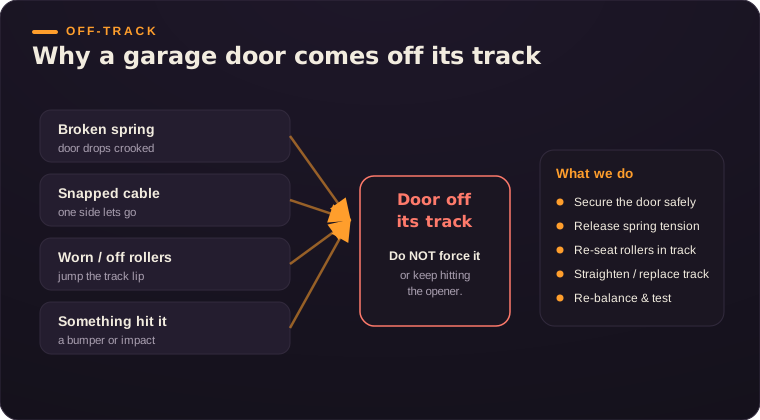
The specific noises that warrant immediate attention rather than a routine tune-up: a deep metallic creak or twang from the spring area (a spring coil under stress, not just dry metal); a scraping noise that changes in pitch partway through travel (a roller has cracked and is dragging a fragment); a thud on every close that has gotten noticeably louder over a few weeks (increasing imbalance); or a squeal that continues even after you've lubricated all the hinges (a bearing plate or roller stem that is seized, not just dry). These sounds mean something is actively failing rather than just wearing.
When you call us for a noisy-door service call, the tech calls ahead 10 to 30 minutes before arriving and texts if unable to reach you. On-site, we start with the diagnostic: we run the door through several cycles while watching each component — rollers, hinges, cables, drums, springs, and the opener's force draw. We time the travel speed and feel the door balance manually by disconnecting the opener and lifting from the bottom. A balanced door should stay in place when you let go at mid-travel; one that drops or rises on its own has spring tension that is off.
The standard tune-up work includes replacing all the rollers (the full set, not just the worst ones), lubricating every moving metal contact point in the correct order with a proper garage-door lubricant, tightening every bracket, hinge plate, and lag bolt in the system, and re-checking the opener's down-force and travel limit calibration so the door stops cleanly without slamming. The tech also does a safety check of the auto-reverse system and the emergency release. If anything besides the rollers and lubrication needs attention — a bent track section, a fraying cable, a hinge plate with a cracked weld — we call it out on the spot and quote it before any work starts. The $79 service call goes toward the tune-up if we do the work the same day, and most homeowners find the door runs noticeably quieter within the first few open-close cycles after the tech leaves.
Not sure? Tap what your door is doing in the tool below and we'll tell you the likely cause in plain language — or just call (913) 731-0190 and a real person will sort it out.


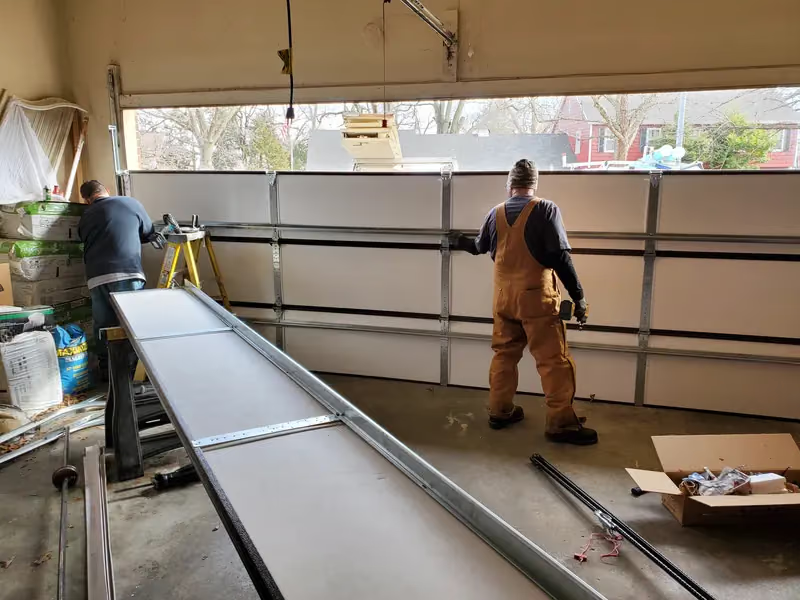
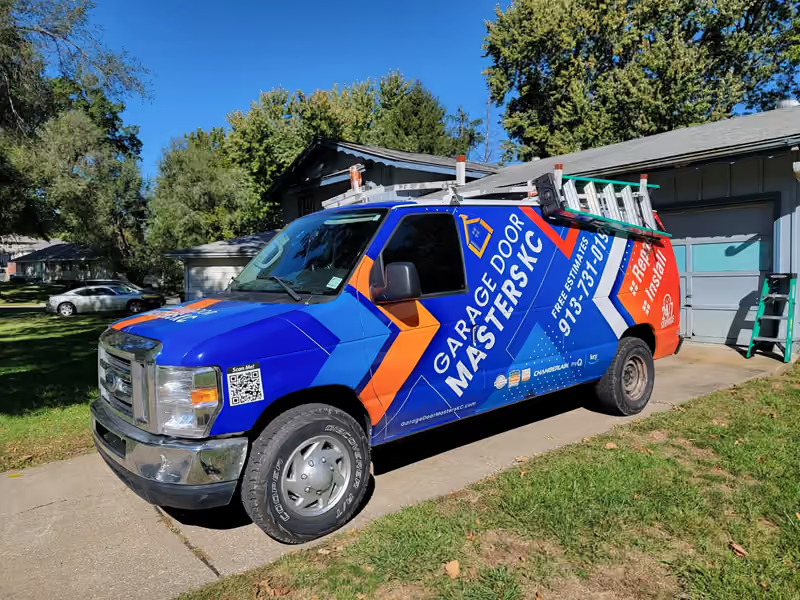
Our own crew and trucks — jobs across the Kansas City metro.
Tap what’s happening — we’ll tell you what it usually is, in plain language, and how fast we can be out. No robots, no runaround.
Not sure? That’s fine — call (913) 731-0190 and a real person will sort it out, 7 days a week.
Before you call, this hand-test tells you whether the noise is a quick fix or a spring on its way out — and where the door reverses tells you why.
Watch where it reverses. A door that reverses near the floor is usually a balance or down-limit issue; one that reverses partway up is fighting a failing spring or a binding roller. Tell us what you saw and we can often narrow it down before we arrive.
Never bypass the photo-eye sensors at the bottom of the tracks to force a noisy door shut — they're the safety reversal that stops the door on a pet, a kid or a bumper. And never touch the bottom roller brackets or the springs: both are under extreme cable tension and can injure you badly. Those come out as part of a pro visit.
A real person answers 7 days a week and a tech can usually be out the same day. The $79 service call goes toward the repair when we fix it same-day.
Every review above is a real, attributed Google review — no filtering, no incentives, no paraphrasing. Read all 490+ reviews and how we verify them →
We were able to get someone out very quickly. Our tech did an awesome job — very courteous and professional.
Our tech answered, was at our house in 30 minutes, and had it fixed within the hour. Smart, friendly, skilled.
Our tech was excellent! Came out on short notice on a Sunday. Five stars, and would wholeheartedly recommend to anyone looking for garage door repair or replacement.
Thanks for making the drive to our place and attending to our needs so quickly and efficiently!
Very timely service. Highly professional work by our technician. Don’t forget to do your annual maintenance!
Same-day service at a fair price for a tension spring. Exactly what you want when the door won’t open.
I was very pleased with the work done and the expertise displayed by our technician. He was punctual and professional.
On time and always professional. Definitely recommend.
A real person answers, 7 days a week — same-day service across the KC metro.
Booking calendar loading — or call/text us now (a real person answers, 7 days):
Or call (913) 731-0190Or text usReal-time online booking. Prefer to talk? Call or text (913) 731-0190 — a real person answers, 7 days a week.
Type to search every page — try a city, a problem, or a part.