You can usually narrow a garage door problem to the right part just by reading the symptom — before you ever pick up the phone. A loud bang then a stuck door means a broken spring. A door that closes then reverses is almost always the photo-eye sensors. A crooked or jammed door has likely come off its track. Below is a symptom-by-symptom guide to reading the most common failures safely, plus the Kansas City seasonal patterns that push some of these failures to spike in January and early spring — and what to tell us when you call. A few safety basics before you start: never force a door that may have a broken spring (the counterbalance is gone and the door will be dangerously heavy), never try to manually re-track a door while the opener is connected, and keep bystanders clear of the door when testing it under power. If you can identify the symptom but are not comfortable handling the repair yourself, call Garage Door Masters KC at (913) 731-0190 — a real local person answers 24/7, and most KC calls are finished same-day. Our $79 service call is credited toward the job if you proceed same-day.
Before you start: three safety rules
The garage door system involves springs and cables under hundreds of pounds of stored tension. You can do a lot of safe, useful diagnosis without touching the hardware at all — and knowing where the line is matters before you start poking around.
- Never try to force a stuck door open or closed. If the door is under tension and something has failed, forcing it can cause the door to fall suddenly, damage the tracks, or injure you.
- Do not attempt to adjust or replace springs or cables yourself. Torsion springs in particular store enormous energy. A spring that releases unexpectedly can cause serious injury. This is one of the few jobs in home maintenance where DIY carries real risk — leave it to a tech with the right tools and training.
- Use the emergency disconnect only when the door is fully closed. The red cord hanging from the opener rail disconnects the carriage from the door so you can operate it manually. If the door is halfway up and a spring is broken, pulling the release can send the door crashing down. Always disconnect with the door in the down position.
Torsion spring
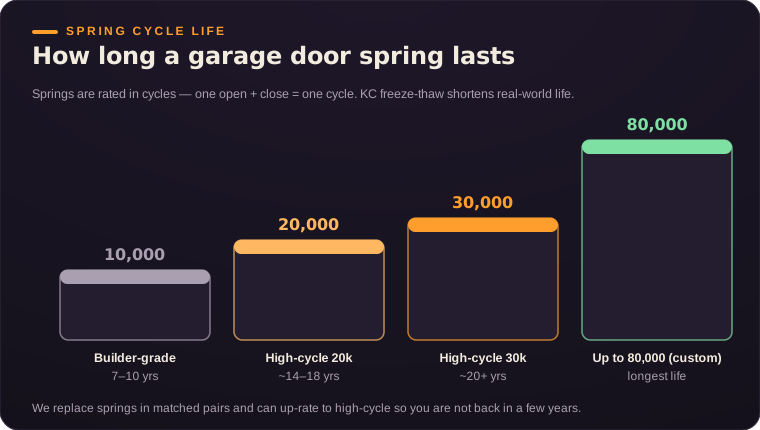
Wound steel above the door that stores the energy to lift it. A standard spring is rated about 10,000 cycles (7–10 years); we install high-cycle springs up to 80,000.
Quick symptom guide — 6 things your door might be doing
- Loud bang, door won't lift — broken torsion spring. Look above the door with a flashlight; a broken spring appears in two pieces on the shaft. Do not run the opener. Call for same-day replacement.
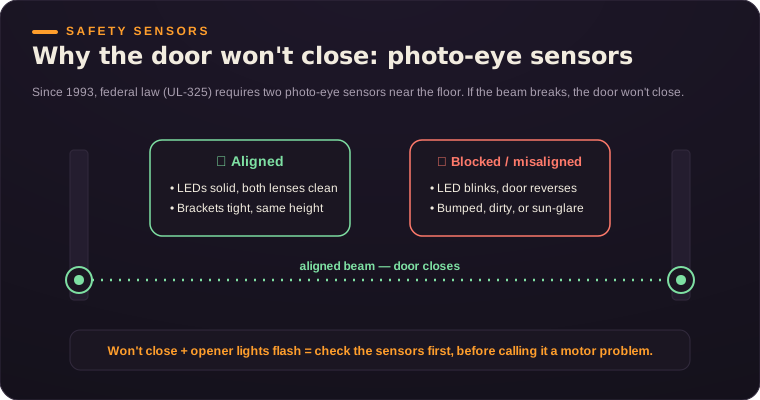
- Closes then reverses back up — photo-eye sensor obstruction or misalignment. Check the LED on each sensor; a blinking or off light means the beam is broken. Wipe the lenses and realign the sensor.
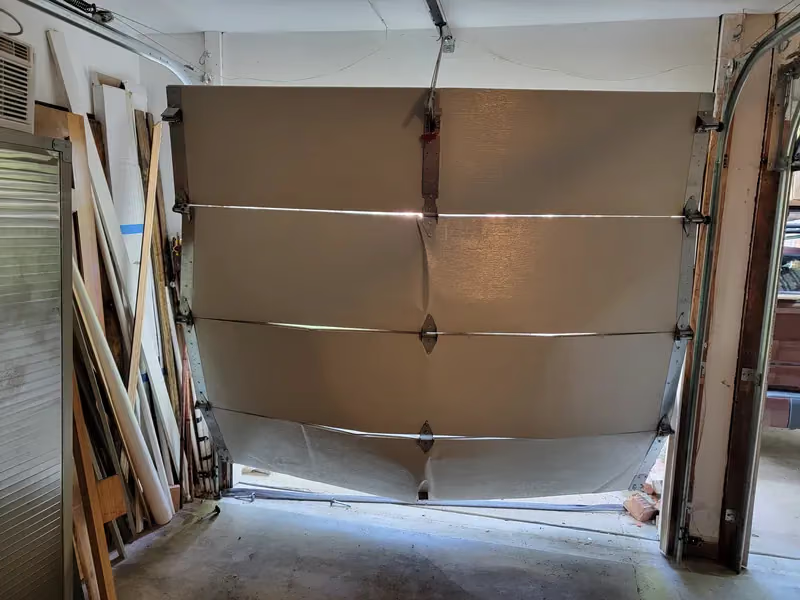
- Off-track or crooked — roller out of the track, snapped cable, or vehicle impact. Do not run the opener or try to force the door. Call for a same-day re-track service.
- Opener runs but door doesn't move — stripped drive gear inside the opener. Pull the emergency release and try to lift from the center of the bottom panel with both hands. If it rises easily, the problem is in the opener drive. If the door is very heavy or won't budge, stop — a broken spring removes the counterbalance (a 16×7 door becomes 150–200 lbs unassisted); forcing it risks injury and track damage. Call for service.
- Wall button works, remote doesn't — dead remote battery, lost programming, or coiled antenna. Replace the battery first; then reprogram using the learn button on the motor unit.
- Slow, grinding, or jerky movement — worn rollers, dry hinges, or imbalanced springs. Apply a silicone garage-door lubricant to hinges and roller stems; if grinding continues after lubrication, schedule a tune-up.

A loud BANG — now it won't lift
That gunshot crack from the garage is almost always a torsion spring breaking. Torsion springs run horizontally above the door, wound tightly around a steel shaft. They store the energy that counterbalances the door's weight — the spring does the lifting, not the opener motor. When one breaks, that energy releases instantly, which is why the sound is so dramatic.
After a break, the door becomes a dead weight. A standard 16×7 steel door weighs 150–200 lbs; without the spring's counterforce, the opener cannot lift it and neither can most adults without serious effort. You will usually see the broken spring in two pieces above the door if you look up with a flashlight.
What to do: Do not try to force the door open and do not run the opener — it will strain the motor and may damage the drive gear trying to move a door it was never designed to lift unassisted. Leave the door closed, disengage the opener if needed, and call. Broken torsion springs are one of our most common calls and almost always a same-day fix. Springs are replaced in matched pairs — if one broke, the other is at or near the end of its service life as well.
It closes, then reverses back up
A door that starts down and then pops right back up is almost always triggering its safety-reversal system. Federal law requires garage door openers sold since 1993 to include two reversing mechanisms: a photo-eye beam near the floor and a pressure-sensitive auto-reverse that kicks in if the door meets resistance while closing.
The photo-eye system is the most common culprit. Two sensors sit about 4–6 inches off the floor on either side of the door. One sends an infrared beam; the other receives it. If anything breaks the beam — or if the sensors are misaligned, dirty, or obstructed — the opener receives a "something is in the way" signal and reverses the door. Indicator: check the LED light on each sensor. A solid green or amber light means it is aligned and receiving signal. A blinking or off light means there is a problem. Common quick fixes: wipe the sensor lenses clean, make sure nothing is blocking the beam path, and check that neither sensor was bumped out of alignment.
If the sensors look fine, the reversal may be triggered by the down-travel limit setting — the opener stops and reverses because it thinks it has hit something when it actually just reached the floor. This is a simple adjustment on most LiftMaster and Chamberlain units. Sun glare on east-facing KC garages in morning hours can also temporarily interfere with sensor reception. If the problem is intermittent and time-of-day dependent, that is worth mentioning when you call. See our full guide on garage doors that won't close.
It's off-track or crooked
A door hanging at an angle, jammed partway up, or wedged into the track has lost alignment — usually because a roller came out of the track, a cable snapped or jumped its drum, or something impacted the door hard enough to knock a panel out of line.
The danger with an off-track door is that it is under uneven tension. The side that is still in the track is holding weight the other side should be sharing. Running the opener in this state can worsen the damage and, in the worst case, cause the door to fall. Do not try to muscle it back into the track yourself — it requires the right tools and sequence to re-hang safely, especially if a cable is involved.
In Kansas City, off-track failures spike in two situations: in January when frozen tracks or ice on the floor grab the bottom seal and pull the door sideways, and any time a vehicle clips the door or the bottom panel. Clay-soil settling can also shift a garage floor over time, causing the bottom of the track to creep inward and eventually catch rollers. Read more in our off-track garage door guide.
The opener runs but the door doesn't move
You hear the motor, the opener light comes on, but the door sits completely still. This is a classic sign of a stripped drive gear — the plastic gear inside the opener that engages the chain, belt, or screw drive. Drive gears are designed to fail before the motor in order to protect the more expensive components, which means this failure is doing its job, but the door is not going anywhere until the gear is replaced.
A less common but related symptom: the door moves a few inches and stops, or the opener sounds labored and then cuts out. This can indicate a broken gear, a drive mechanism issue, or — if the springs are weak — an opener straining to lift more weight than it was designed to handle. Disengage the opener with the emergency release cord and try to lift the door manually from the center of the bottom panel with two hands. If the door rises easily and stays up on its own, the problem is in the opener drive — the door hardware is fine. If the door does not rise easily, or feels extremely heavy, stop immediately. A broken spring removes the counterbalance that normally carries the door's weight — a standard 16×7 steel door becomes 150–200 lbs unassisted. Attempting to force it can cause the door to drop suddenly and risks injury and track damage. Leave the door closed and call instead. Our opener repair page covers the full diagnostic breakdown.
The wall button works but the remote doesn't
If the wall-mounted button opens the door fine but one or all remotes do not respond, start with the obvious: replace the battery in the remote. Remote batteries typically last 1–3 years and give no warning before they go dead. If a fresh battery does not fix it, the remote may need to be reprogrammed to the opener — a process that takes about 60 seconds with the learn button on the motor unit. If multiple remotes stopped working at the same time, check whether the antenna wire is hanging straight down from the motor unit — a coiled or tucked antenna significantly reduces range. A remote that works from 2 feet but not 20 feet is almost always an antenna or programming issue, not an opener failure.
Slow, grinding, or jerky movement
A door that used to run smoothly but now jerks through its travel, grinds audibly, or moves noticeably slower than it used to has worn hardware that is adding friction to the system. The most common culprits are:
- Worn rollers. Steel rollers develop flat spots and pitting after years of use. Each flat spot causes a slight thud as the roller travels through the curve at the top of the track. Replacing steel rollers with sealed nylon rollers eliminates most of the noise and dramatically smooths travel.
- Dry hinges and track. The hinges at each panel joint need periodic lubrication with a silicone garage-door lubricant — not WD-40, which is a thin penetrant and evaporates quickly. Dry hinges squeal and increase resistance throughout the travel cycle.
- Out-of-balance springs. Springs lose tension over years of cycling. When one spring (on a two-spring system) weakens more than the other, the door pulls to one side as it travels and the opener works harder than it should. This shows up as the door moving crooked or slowly on one side.
A professional tune-up that covers roller replacement, lubrication, hardware tightening, and spring balance check will usually eliminate slow or jerky movement and add years of quiet operation. It is also the best way to catch the next failure before it turns into an emergency. Most KC homeowners who get tune-ups annually do not experience sudden failures — they catch worn parts while there is still time to schedule a non-urgent appointment.
It opens or closes partway and stops
A door that stops at a consistent point — say, always 4 feet off the ground, or always 1 foot before it fully closes — is usually hitting a travel-limit boundary set in the opener. Most openers have adjustable open-limit and close-limit settings that define how far the door travels in each direction. If those limits drift out of calibration (which can happen after a power outage, firmware reset, or if someone adjusted them incorrectly), the door will stop short. This is an adjustment, not a part failure.
A door that stops at an inconsistent point — sometimes halfway, sometimes three-quarters, with no pattern — is more likely hitting a binding point in the track caused by a bent track section, a roller that is about to come out, or a hinge that is about to fail. Watch the door travel carefully: the point where it hesitates or stops is usually the point to inspect on the track and hardware.
Kansas City seasonal patterns: when failures spike and why
Kansas City averages 25–35 days per winter when temperatures cross the 32°F threshold in both directions — consistent with NOAA historical climate data for KCI Airport. This thermal cycling accelerates wear on every part of the door system in ways that differ from milder climates.
The patterns our crews see most often:
- January and February: spring breaks. Springs lose some of their temper in extreme cold, and metal that has been contracting and expanding for weeks is under more stress than in milder months. The first brutally cold snap of the year — especially after a period of mild weather — is when we see the highest spring failure rate. If your door has been running slowly or showing any of the warning signs above, winter is the worst time to let it go.
- March through April: sensor problems. Ice that accumulated around the sensor housings during winter starts to melt and drip, temporarily misaligning or shorting sensors. Also, longer daytime hours mean sun glare on east-facing garage doors starts in earnest. If your door reversal problem is seasonal and started in spring, check for sensor ice damage or glare.
- Summer: opener electronics. Heat inside an un-air-conditioned garage can reach 110–120°F on a July afternoon. Opener logic boards and capacitors are rated for high temperature but prolonged heat exposure shortens their service life. An opener that starts acting erratically — random reversals, partial travel, remote range dropping — in July or August may have a heat-stressed capacitor or logic board issue.
DIY vs. call a pro: the honest breakdown
There is real work a homeowner can safely do before calling: replacing a remote battery, reprogramming a remote, cleaning or realigning photo-eye sensors, applying lubricant to hinges and tracks. These do not require any special tools and carry no injury risk. Do them regularly and you will extend the life of everything.
The line to stop at: anything involving the springs, cables, drums, or bottom bracket. These parts are under tension that can cause serious injury if released incorrectly. An off-track door should not be forced back into alignment without releasing that tension first — and releasing it safely requires winding bars and a specific sequence. This is a 20-minute job for a tech who does it daily; it is a real injury risk for someone doing it once without the tools.
When in doubt, use our interactive diagnose tool below to confirm what you are looking at, then call us. We will confirm the diagnosis on-site before any work starts — and the $79 service call fee goes toward the repair if we do it same-day.