

For most Kansas City homes with an attached garage, an insulated garage door is worth it — sometimes significantly so. Insulation holds temperature, cuts road and opener noise, and makes the door more rigid and dent-resistant. The energy savings are real but usually secondary to comfort and quiet. For a fully detached utility garage you do not heat, the math is different. This guide walks through what insulation actually does in a KC climate so you can make the call that fits your home and your budget. KC's 25–35 annual freeze-thaw cycles and summer highs past 95°F make insulation earn its cost faster here than in most U.S. markets. For an attached garage, we recommend at least R-12 (dual-layer polystyrene) as a baseline, and R-16 or better (triple-layer polyurethane) for attached garages with living space above or a workshop that needs year-round climate control. Garage Door Masters KC installs the full Clopay and DoorLink insulated lineup across the metro — authorized dealer, professional installation crew, and a free new-door estimate with flat-rate pricing you approve before any work is scheduled.
What "insulated" actually means
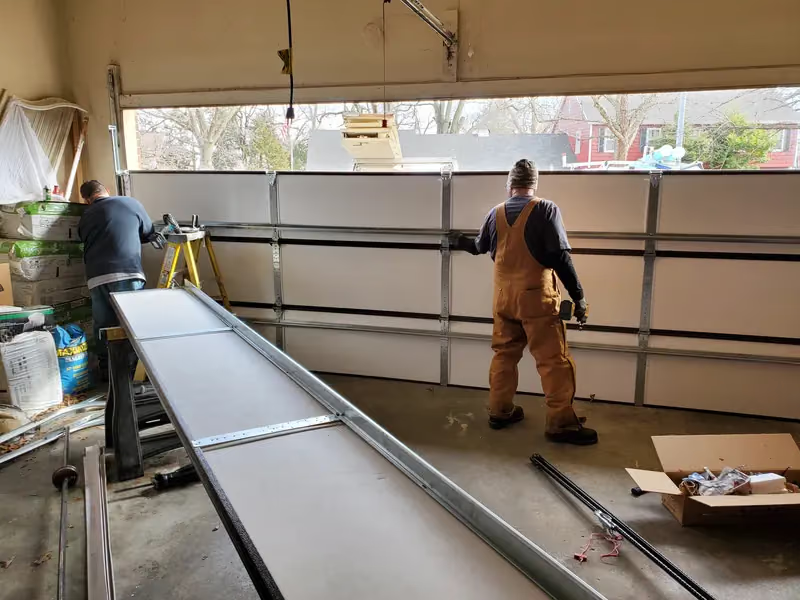
An insulated garage door sandwiches foam between steel skins rather than leaving the sections hollow. There are two main foam types, and the difference matters:
- Polystyrene — rigid foam board or bead-board panels that are inserted or adhered behind the outer steel skin. Found in most mid-grade two-layer doors. Provides meaningful insulation (R-6 to R-10 typical) at a more accessible price point.
- Polyurethane (foam-injected) — used in Clopay's Intellicore construction and equivalent DoorLink lines. The foam is injected as a liquid and expands to fill and bond to both the outer and inner steel skins. The result is a monolithic core that is structurally stiffer, has a higher R-value (R-12 to R-18.4 depending on configuration), and does a noticeably better job of deadening noise. Pick up a polyurethane-insulated door and a hollow door side by side — the difference in rigidity is immediately obvious.
The third category — single-skin steel with no insulation — is a hollow door. Fine for a storage shed or detached utility building. Not what we recommend for attached garages in the Kansas City climate.
R-value: what the numbers mean for a KC home
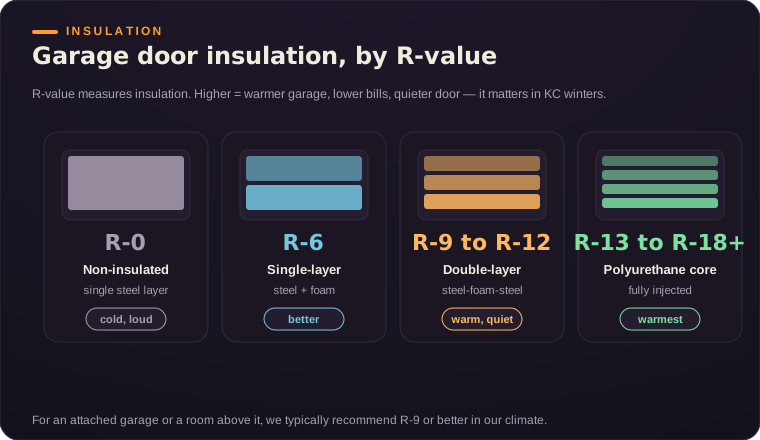
R-value is a measure of thermal resistance — how well a material resists heat moving through it. Higher is better. Here is how the tiers shake out for residential garage doors:
- R-0 to R-4 — single-layer steel or very basic two-layer. Minimal thermal performance. Appropriate only for detached, unheated garages.
- R-6 to R-10 — polystyrene two-layer construction. A meaningful step up. Good for attached garages where budget is a constraint and the space is not used as a habitable room.
- R-12 to R-16 — three-layer polyurethane construction (Clopay Intellicore and equivalents). The sweet spot for most attached garages in the KC metro. Provides real thermal separation, significant noise reduction, and excellent structural rigidity.
- R-16 to R-18.4 — premium polyurethane sections, often in thicker door profiles. Best for garages used as workshops, home gyms, finished studios, or any space where you are spending time and want it to hold temperature reliably year-round.
For context: a well-insulated exterior wall in a Kansas home is typically R-13 to R-21. A good insulated garage door puts a large part of the garage's thermal envelope within the same ballpark — which matters when that garage shares a wall with your kitchen, family room, or a bedroom above.

Why Kansas City's climate makes insulation matter more
Kansas City sits at a climatic crossroads where weather patterns from the Rockies, Gulf, and Great Plains converge. That produces some of the widest temperature swings of any major metro in the country, and it makes thermal performance a genuine concern rather than a marketing add-on.
Specifically, the KC metro experiences:
- 25–35 freeze-thaw cycles per winter. Temperatures that cross 32°F repeatedly — sometimes multiple times in a single week — stress materials through repeated expansion and contraction. Hollow steel doors warp, expand, and contract at the edges; insulated doors hold their shape better over years of this thermal cycling.
- Summer highs consistently above 90°F, often pushing 100°F. A south- or west-facing garage door that gets direct afternoon sun in July is absorbing intense radiant heat. An uninsulated door passes most of that heat straight into the garage. An insulated door significantly slows that transfer, keeping the garage cooler and reducing the temperature gradient against the shared wall with your living space.
- Severe storm seasons (spring tornadoes, summer derechos, ice storms). Wind and impact resistance matter in KC in a way they do not in milder climates. The foam core of an insulated door adds rigidity that helps it resist wind pressure and minor impacts. It also keeps the door functioning during cold snaps that would cause a hollow door's bottom seal to stiffen and tear.
The practical result: insulation does real work in this climate, not just theoretical work on an energy-efficiency certificate.
The three benefits that matter most for KC homeowners
1. Comfort in an attached garage. An attached garage is a thermal buffer zone between the outside and your living space. If that buffer is a 16-foot-wide opening covered by a hollow steel door, you are essentially putting a thin metal sheet between your kitchen wall and a January night at 10°F. An insulated door keeps the buffer zone closer to livable temperature — often 15–25°F warmer in winter than an uninsulated garage in the same conditions. That translates directly to a kitchen floor that is not ice cold, a water heater that does not work as hard, and a car that starts more reliably on January mornings.
2. Noise reduction. Road noise, neighbor noise, opener rumble — the foam core deadens all of it. Homes near busier KC roads and highways or in neighborhoods with tighter setbacks notice a meaningful reduction in traffic sound. The door also runs quieter: the rigid foam eliminates the vibration and rattling that hollow sections transmit through the track system. If there is a bedroom or home office above the garage, the difference between an insulated and an uninsulated door is significant — especially combined with a belt-drive opener.
3. Structural rigidity and dent resistance. The foam core bonds the steel skins together, creating a much stiffer section. A three-layer polyurethane door resists denting from kids, sports equipment, minor car bumps, and the kind of hailstones that are a routine occurrence in KC spring storms. A hollow single-skin door dents easily — and once a panel is dented, it usually needs to be replaced. Insulated doors hold up better over a 20-year lifespan in this climate.
Realistic energy savings — an honest picture
We are not going to tell you that an insulated garage door will slash your heating bill by 20%. The energy math depends too much on variables we cannot control: how well the rest of the garage is sealed (walls, ceiling, side door), whether you condition the space at all, and how the garage connects to the rest of your house's HVAC envelope.
What is true: if your garage is attached, shares walls with conditioned space, and the ceiling above the garage is not well-insulated, a high-R door is part of reducing heat loss at that boundary. An attached garage shares a wall, and often a ceiling, with heated and cooled rooms, so an uninsulated door is a real path for that conditioned air to escape — a well-insulated door addresses the largest opening in that surface area.
The more honest value proposition is comfort and durability. Think of any energy savings as a legitimate bonus that accumulates over the 15–20 year life of the door — not as the primary reason to choose a higher-R door.
Clopay and DoorLink insulated options we carry
As authorized dealers for both brands, we carry the full insulated residential lineup from each. A quick overview:
- Clopay Gallery Collection — traditional raised-panel and long-panel designs in two-layer (polystyrene) and three-layer Intellicore (polyurethane) construction. The most common choice for KC homes with traditional architecture. R-values from R-6 (two-layer) to R-18 (Intellicore).
- Clopay Coachman and Canyon Ridge — carriage-house aesthetics in steel, with polystyrene or Intellicore polyurethane insulation. R-6 (Coachman, two-layer) to R-18.4 (Canyon Ridge with Intellicore). Popular in Leawood, Prairie Village, and Olathe neighborhoods with Craftsman and Colonial architecture.
- Clopay Modern Steel and Avante — clean flush-panel and full-view modern designs. Intellicore insulation available on Modern Steel (up to R-18.4); Avante uses aluminum framing with tempered glass.
- DoorLink insulated lines — raised-panel, carriage, and flush families in polystyrene (R-6 to R-10) and polyurethane (R-12 to R-18) options. DoorLink is a strong value choice and built to high quality standards as a U.S.-manufactured product.
You can preview styles in our Door Visualizer before your free estimate. You can also read the full brand breakdown in our Clopay guide and DoorLink guide.
When you do not need a highly insulated door
Not every garage needs a premium insulated door, and we will tell you that honestly at the estimate visit:
- Fully detached garage, not heated, not adjacent to living space. A mid-range two-layer polystyrene door gives you durability and reasonable thermal buffering without paying for polyurethane you will not benefit from.
- Garage in a mild microclimate or shaded north-facing wall. Less sun exposure and more moderate temperature swings reduce the case for maximum R-value. A solid two-layer is usually sufficient.
- Short ownership horizon. If you are selling the home in the near term, a good mid-grade insulated door still adds curb appeal and a positive inspection impression without the cost of a premium line.
Insulation and your spring and opener system
One technical point worth knowing: an insulated door weighs more than a hollow door of the same size. A standard 16×7 hollow steel door might weigh 100–130 lbs; the same size in three-layer polyurethane construction can weigh 145–175 lbs. The torsion spring assembly that counterbalances the door has to be sized to the actual weight. If someone installs a heavier insulated door without re-sizing the springs, the opener motor runs under excessive load and the springs wear faster.
Every installation we do includes spring sizing to the exact door weight. If you are replacing an old hollow door with an insulated one, we size new springs at the time of installation — that is standard practice, not an upsell. Your new door installation quote will include properly sized hardware for the specific door ordered.
What to expect at a free estimate
When you book a free new-door estimate, here is what happens:
- We call or text ahead 10–30 minutes before arriving.
- We measure the opening — rough and finished — and check the existing header space and side room to confirm what door configurations will fit.
- We show you the Clopay and DoorLink options that fit your opening, starting with the R-value tier that makes sense for your garage type.
- We talk through style, color, windows, and opener if applicable.
- You get a written flat-rate quote before we leave. No ballpark, no "starting at" numbers that change at the curb.
The estimate is completely free — no service call fee applies to new door consultations. If you want to browse styles before we arrive, use the Door Visualizer and note what you like. And if budget is a consideration for a larger project, ask about our financing partner — available at the time of service, approval not guaranteed.