

A garage door is the largest moving mechanical component in most homes — and one of the most neglected. In Kansas City, where 25–35 freeze-thaw cycles hit every winter and summer temperatures push past 95°F, the mechanical stress is real. A door that goes without maintenance for three to five years will quietly accumulate wear that eventually shows up as a broken spring at 11 p.m. in January. This guide gives you the exact checklist: what to inspect yourself, what to lubricate, when to test the safety systems, and when to call a professional. We have organized it by season to match KC's actual weather patterns. The four most important annual tasks: (1) lubricate the springs, hinges, and rollers with a silicone garage-door lubricant — not WD-40, which is too thin to lubricate properly; (2) run the 2×4 auto-reverse test on the opener; (3) check the photo-eye sensor beams; and (4) do the manual balance test — disconnect the opener and lift the door by hand to waist height; it should hold in place. For the balance check, spring wear evaluation, and full 30-point safety inspection, Garage Door Masters KC provides professional tune-ups across the KC metro. $79 service call, same-day scheduling.

The short version: what your door needs every year
Before diving into seasonal specifics, here is the full annual checklist at a glance. Every item is explained in detail below.
- Lubrication (twice per year): Rollers, hinges, torsion spring bearing plates — a silicone garage-door lubricant only. Never WD-40.
- Auto-reverse test (twice per year): 2x4 lumber test for close-force; leg/board wave for photo-eye beam.
- Photo-eye cleaning and alignment (twice per year): Clean lenses with a soft cloth; check LED indicators for solid vs. blinking.
- Visual inspection (monthly, takes 60 seconds): Look at springs for gaps or separation, cables for fraying, rollers for flat spots, bottom seal for cracks.
- Balance test (twice per year): Disconnect the opener, lift the door manually to waist height, let go — it should hold its position, drifting no more than 2–3 inches in either direction over 30 seconds.
- Weather seal inspection (spring and fall): Bottom seal and side/top weatherstripping for cracks, hardening, or gaps.
- Opener settings check (annually): Open-force and close-force limits, travel limits, safety-reverse sensitivity.
- Professional tune-up (annually or twice per year for heavy-use doors): Full 30-point inspection and adjustment by a trained technician.
Spring maintenance (March–April): catching winter damage
Kansas City winters are the hardest season on garage door hardware. By March, most doors have completed 50–100 full open-close cycles in temperatures ranging from single digits to the 50s — each cycle involving spring tension changes, metal contraction and expansion, and lubricant thickening. A spring inspection in early spring is not precautionary; it is essential.
Visual spring and cable inspection
Stand in your garage with the door closed and look at the torsion spring (the large horizontal coil above the door) or extension springs (the pairs of springs running parallel to the horizontal tracks on each side). You are looking for: a visible gap or separation in the coil (a broken spring), rust or corrosion on the coil surface, or significant surface pitting. Also look at the cables — they run from the bottom corners of the door, up through cable drums at the top. Look for fraying, kinking, or rust. Any of these findings mean schedule a professional inspection before continuing to operate the door. Never try to adjust, wind, or close a gap in a spring — springs under tension are dangerous and require professional tools to safely service.
If the door has been slow to open, required more force than usual, or made a grinding or straining sound over winter, those are symptoms of a spring approaching the end of its cycle life. Standard torsion springs are rated for 10,000 cycles (7–8 years at 4 cycles per day in KC's climate). We build custom high-cycle springs in-house, up to 80,000 cycles. If your door is 6–8 years old and has never had the springs replaced, schedule a spring inspection before the next winter season.
Lubrication after winter
Winter cold thickens lubricants and can strip them off metal surfaces through thermal cycling. A spring lubrication pass in March refreshes the protective layer before the summer heat cycle begins.
Use a silicone-based garage-door lubricant spray (available at any hardware store — a purpose-made garage-door silicone lube, NOT standard WD-40, which is a thin penetrant, not a lubricant). Apply to:
- Roller stems — the metal shaft where each roller fits into its hinge bracket. Do not spray inside the track itself.
- Hinge pins — the pin at the center of each hinge where the two halves pivot. One short burst per hinge.
- Torsion spring bearing plates — the circular metal plates at each end of the torsion spring shaft. These are the bearings that support the full weight of the coil; keeping them lubricated prevents a binding shaft that adds stress to the spring.
- Lock bar and keyhole — if your door has a manual lock, spray the keyhole and side-lock bar to prevent rust binding.
Do not lubricate the tracks. Tracks should be clean and dry — lubricant in the track collects grit and can cause rollers to slip. If the tracks look dirty, wipe them clean with a rag before lubricating the rollers.
Photo-eye cleaning after winter grit and spider season
The photo-eye sensors at the bottom of your garage door tracks are the primary safety device on the system — they stop and reverse the door if anything breaks the infrared beam during closing. In winter, they can be coated with salt spray, grit, and condensation. In early spring, they attract spider webs (spiders like the protected corners). A contaminated lens causes intermittent beam breaks that show up as the door reversing unexpectedly or refusing to close.
Clean both lenses with a soft, dry cloth. Then check the LED indicators: the sending sensor (typically with a yellow or amber light) should show a solid light; the receiving sensor (green light) should also be solid, not blinking. A blinking receiving sensor means the beam is not reaching it — clean again, or realign by loosening the wing nut and angling the sensor until the light goes solid before retightening.
Summer maintenance (June–August): heat, openers, and seals
Kansas City summers bring sustained heat that stresses opener electronics, accelerates seal degradation, and can cause dark-colored door panels to absorb enough radiant heat to affect the metal's finish. Summer maintenance focuses on the opener system and the door's weatherproofing.
Opener health check
Run the door through three to five full cycles and pay attention to: motor sound (a grinding or hesitating motor is a sign of worn drive gears — the most common opener repair in KC), travel consistency (the door should stop at exactly the same open and close positions every time), and auto-reverse sensitivity. For the auto-reverse test, place a 2x4 flat on the floor in the door's path — the bottom panel should touch the wood and the door should immediately reverse fully. If it hesitates or continues pressing, the close-force limit needs adjustment; that is a setting on the opener's motor head, and if you are not familiar with the adjustment process, leave it to a technician.
If your opener is 12+ years old and has been reliable, summer is a good time to evaluate a battery backup addition or upgrade. KC's April–May tornado season and winter ice storms can cut power for hours; a LiftMaster or Chamberlain with battery backup keeps the door operational during outages — and in a severe weather situation, not being able to get your car in or out of the garage matters. Ask us about battery-backup-equipped openers on your next service call.
Bottom seal and weatherstripping check
Summer's heat and UV accelerate the hardening and cracking of rubber seals. Check the bottom seal (the black rubber strip that runs along the bottom edge of the door) for cracking, hardening, or sections where it has compressed into a flat strip that no longer seals the gap. Also inspect the side and top weatherstripping — the vinyl or rubber strips mounted to the door frame that seal the sides and top of the door. In summer, look for sections that have peeled away from the frame, hardened to the point of cracking, or been compressed permanently flat. Replacing a bottom seal is a straightforward repair; the material is inexpensive and a new seal dramatically improves the door's weatherproofing and can noticeably reduce dust entry.
Fall maintenance (September–October): the most important service timing for KC
Fall is the single most important maintenance window for Kansas City garage doors, and a professional tune-up in September or October pays back more than at any other time of year. The reason: you are preparing the system for the most stressful season before it arrives, rather than responding to failures in the middle of it.
The balance test
Disconnect the opener from the door (pull the red emergency-release cord) and manually lift the door to waist height — approximately halfway open. Let go. A properly balanced door will hold its position, drifting no more than 2–3 inches in either direction over 30 seconds. A door that falls quickly is either over-heavy (springs worn out, not providing enough counterbalance) or has unequal spring tension causing it to cant. A door that shoots upward is over-sprung. On a two-spring system, also watch for the door to tilt to one side after release — uneven tilt means one spring has lost more tension than the other, a condition that puts asymmetric stress on the cables and tracks. Any of these conditions puts excess stress on the opener motor every cycle. Balance adjustment is a professional-only task involving spring tension changes that require proper safety tools. Reconnect the opener after testing.
Pre-winter lubrication pass
Before the first hard freeze, give the moving parts a light coat of silicone-based garage-door lubricant — never WD-40, which is too light to lubricate and attracts grit. Hit the roller stems, the hinge pivot points, the torsion-spring coils, and the bearing plates. A two-minute lube pass keeps rollers and hinges from binding when the temperature drops, and it is the single easiest thing you can do to head off a cold-morning jam.
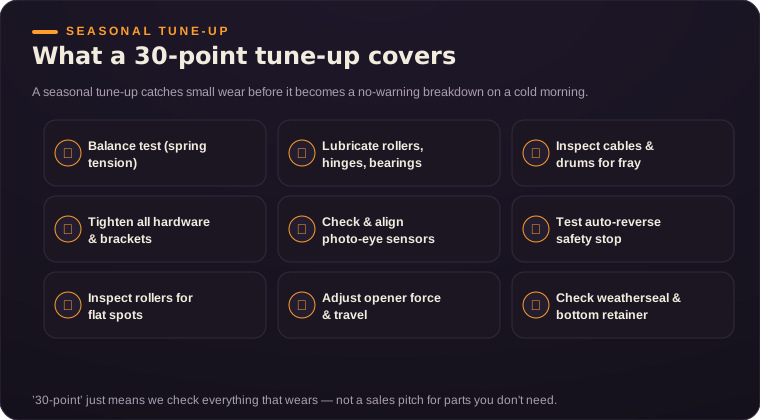
Professional 30-point tune-up: what it covers that you cannot do yourself
A professional tune-up is not just the items above. A technician inspects and adjusts things that require training, tools, and experience to do safely:
- Spring tension and balance — confirmed with precise measurement, not the rough balance test a homeowner can perform.
- Cable tension and drum winding — uneven drum winding causes the door to tilt; cable tension is set with the spring to achieve proper balance.
- Track alignment and plumb — tracks can shift over time from impacts or settling; even slight misalignment adds friction and roller wear.
- Roller wear assessment — a tech can spot a roller that is worn to a flat spot (causes vibration and noise) or has a cracked wheel before it seizes in the track.
- Opener force and travel limit adjustment — these settings drift over time and need calibration against the current door weight and spring balance.
- Photo-eye alignment and beam path check — including confirming UL 325 auto-reverse compliance with actual testing.
- Hinge inspection for fatigue cracks — hinges that are cracking or bending are a safety issue; they are not obvious from casual observation.
Our tune-up is $79 (the same service-call fee that applies toward any same-day repair). It includes all of the above plus a written summary of anything we found and our honest recommendation — no pressure, no upsell on parts you do not need.
Winter (November–February): what to watch for in KC's hardest season
Once the temperature drops, most maintenance work is done for the season — but there are specific failure patterns to watch for in Kansas City winters that every homeowner should know.
Spring break peak: January and February
The highest rate of spring failures in the KC metro happens in January and February, when temperatures oscillate most dramatically between warm spells (30s and 40s) and hard freezes (single digits to teens). Each freeze-thaw cycle is a fatigue event on springs that are already years into their cycle count. If your door suddenly feels heavy, requires two hands to lift manually, or makes a loud bang, those are signs of a spring issue. Do not continue operating a door with a broken spring — the opener is not designed to lift the full door weight unassisted, and attempting to do so will damage the motor and the drive train.
Frozen bottom seal
A worn or deteriorated bottom seal can freeze to the concrete floor overnight. If your door will not open in the morning and the opener is straining loudly, the seal may be frozen to the floor. Do not force it with the opener. Break the seal gently by pushing down firmly along the bottom of the door while manually lifting. Then replace the seal — a frozen seal is telling you it has degraded past the point where it seals properly even when not frozen.
Cold-temperature sensor misalignment
Metal sensor brackets contract in cold weather. If your door starts reversing unexpectedly on cold mornings but works fine when it warms up, the sensors have shifted enough to interrupt the beam. Check the LED indicators on both sensors (solid = aligned; blinking = misaligned) and nudge the receiving sensor until both are solid. Tighten the wing nut before the metal expands again.
When maintenance becomes a repair call
Some findings during a maintenance check mean it is time to call a technician rather than continue DIY:
- Any spring gap, separation, or visible break — call before operating the door further.
- Cable fraying, kinking, or coming off the drum — a frayed cable is a safety issue; the door can drop without warning.
- Rollers with cracked, flat, or missing wheels — rollers keep the door in the tracks; a failed roller can derail the door.
- Auto-reverse fails the 2x4 test — this is a federal safety requirement; a door that does not reverse on contact is a serious hazard.
- Door is significantly out of balance (drops or shoots upward when released at midpoint) — this indicates spring tension issues that require professional adjustment.
- Opener motor grinds or hesitates on heavy-sounding door — the opener is struggling against a door it should not be lifting alone.
All of these fall under our standard repair service. The $79 service call is credited toward any same-day repair, so there is no cost to having us come look at something you found during maintenance. If what we find is a broken spring or a worn cable, we fix it the same visit — we stock common parts on the truck.