

At some point every garage door reaches the question: is it worth fixing this again, or is it time for a new door? There is no formula that answers it for every situation, but there is a clear framework — and a set of specific signals — that make the answer obvious in most cases. This guide walks through how we think about it honestly, including what Kansas City's climate does to the calculus and what the real cost comparison looks like. The short version: repair when the door is under 15 years old and a single component failed — a spring, cable, opener, or roller is a consumable part, not a sign the whole door is done. Start taking replacement seriously when the door is 15–20+ years old in KC's freeze-thaw climate, has had multiple overlapping repairs in a short window, or has significant structural panel damage that cannot be matched. Repairing a structurally sound door usually makes sense; putting the same work into an aging door that also needs cables, seals, and weatherstripping usually does not. Garage Door Masters KC gives you an honest assessment either way — free new-door estimate, $79 service call.
The decision in 30 seconds
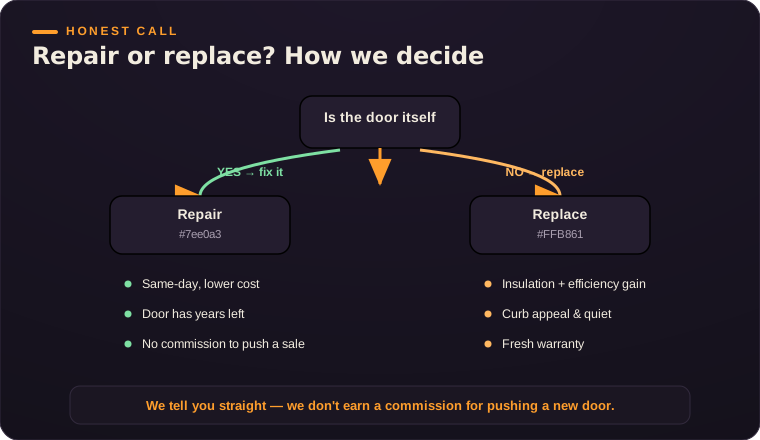
Here is the short version of how we evaluate repair vs. replace:
- Door under 10 years old: Almost always repair. The door has most of its life ahead of it. Springs, cables, openers, and sensors are all serviceable components that break and wear independently. Replacing a door because a spring broke is like replacing a car because a tire went flat.
- Door 10–15 years old: Depends on the repair cost and the condition of the rest of the door. A single repair (spring, cable, roller) is usually still the right call. Multiple overlapping repairs in a short window, or significant panel damage, starts to shift the math toward replacement.
- Door 15–20+ years old in KC: Start taking replacement seriously as part of the conversation. At this age — especially with KC's freeze-thaw climate — you are often spending on repairs that extend a door's life by months rather than years. A new door also brings R-value, modern weatherstripping, and components that have not accumulated 15+ years of fatigue stress.
- Major structural damage: Any situation where the door frame, the track system, or multiple panels are compromised — replacement is usually more economical and safer than extensive repair.
When repair is clearly the right call
Most garage door service calls are straightforward repairs, and repair is the honest answer in all of these situations:
A spring, cable, or roller failed on a door in good condition
The same logic applies to bottom seals, weatherstripping, hinges, and even opener systems. These are components that operate independently from the door's structural life. A 12-year-old door can have a brand new opener, fresh springs, new rollers, and still be a good door that will serve another 8–12 years.
The panel damage is limited and a match is available
A single dented or cracked section does not require full door replacement if the panel can be matched. Clopay and DoorLink both offer panel replacement through authorized dealers like us — we can source replacement sections that match the color, profile, and construction of the existing door. If the match is available and the rest of the door is structurally sound, a panel swap is almost always cheaper than a full replacement and produces a clean result.
The catch: manufacturers discontinue styles and colors over time. A door that is more than seven to ten years old may not have exact-match panels available anymore. In that case, we discuss your options honestly — partial replacement with a close match, full door replacement, or accepting the cosmetic difference if the damage is minor.
The opener failed but the door is in good shape
5 signs it's time to replace your garage door
- The door is 15–20+ years old in KC's climate — Kansas City's harsh freeze-thaw winters accelerate wear beyond what the rated door lifespan assumes. At 15+ years you are maintaining an aging system repair by repair rather than extending a healthy one.
- Multiple components have failed in a short window — one spring breaks, then a cable, then a panel is hit: you are approaching new-door cost one repair at a time without getting a new door. That math favors replacement.
- Panel damage is structural or cannot be matched — if an impact bent the frame enough to affect track alignment, or if the manufacturer no longer makes that panel style (common after 7–10 years), replacement is safer and more cost-effective than extensive cosmetic repair.
- The repair cost approaches 40–50% of a new door's installed price — this is the rule of thumb we use in honest homeowner conversations. Spending near new-door money to preserve an aging system, without getting a new door, rarely pencils out.
- No insulation on an attached KC garage — a single-layer steel door on an attached garage is an R-0 wall between your living space and the outside. In KC's -15°F to 105°F range, an insulation upgrade combined with a new door delivers both value and real comfort improvement.

When replacement is the honest answer
These are the scenarios where we tell homeowners that replacement — while more expensive upfront — is genuinely the better financial and practical decision:
The door is past 15–20 years old and has had multiple repairs
A garage door that is 15–20 years old in Kansas City has been through hundreds of freeze-thaw cycles. The springs have likely been replaced at least once. The weatherstripping and bottom seal have hardened, shrunk, or been replaced. The panels may have surface rust or finish degradation even if the structure is intact. At this point, you are not extending the life of a healthy system — you are maintaining an aging one repair by repair.
The economic math shifts when multiple components are failing within a short window. If you replaced a spring last year, a cable broke this spring, and now a panel has been hit — you are approaching the cost of a new door one repair at a time, without getting a new door. A new Clopay or DoorLink door with a 10-year warranty on panels and a fresh set of springs starts the clock over.
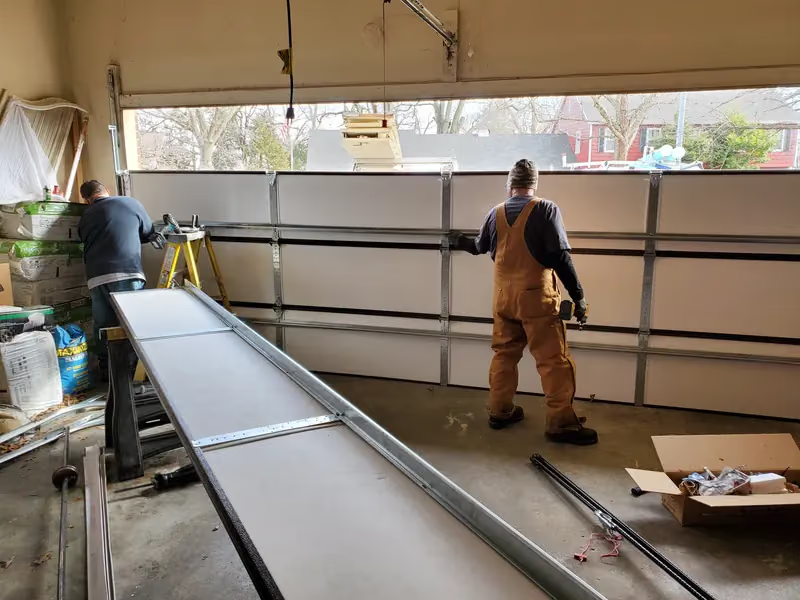
A real example: a few winters back we got a call from a homeowner in Shawnee — cable snapped on a 19-year-old steel door, mid-January, door would not open. When we arrived, the cable break turned out to be secondary: the spring was near end-of-life, two bottom panels had old collision damage that had shifted the sections out of alignment, and the bottom seal had been gone long enough that road salt had worked its way under the door and was corroding the steel from the inside. The homeowner chose a new insulated Clopay door and a matched LiftMaster opener instead, and it was the right call: a 20-year clock reset rather than another 12–18 months on a door that was going to keep generating service calls.
The panels are significantly damaged or structurally compromised
A panel that has been hit by a vehicle — a common KC scenario with tight garages and hurried mornings — can cause more than cosmetic damage. If the impact bent a panel inward far enough to affect the track alignment, or if the section framing is cracked, the door may no longer open and close safely even after cosmetic repair. Doors in this condition need structural evaluation, and if more than one or two sections are affected, replacement is typically more cost-effective and produces a safer result.
We have also seen doors where gradual panel warping — most common on wood doors in KC's humidity — has advanced to the point where the door no longer seals properly. Gaps along panel joints are not just a weatherstripping issue; they indicate that the panel geometry has changed and the sections no longer align correctly. At that stage, no amount of seal replacement fixes the underlying problem.
There is no insulation and the garage is attached to the house
Non-insulated single-layer steel doors were the default for decades. They are functional but essentially a thin metal sheet standing between your conditioned living space and the outside temperature. In Kansas City's climate — where January lows can hit -15°F and July highs can top 105°F — an uninsulated door on an attached garage is a significant year-round energy load on your HVAC.
If the door is also past ten years old, the calculus for replacement is strong: you get a structurally new door and a major R-value upgrade in one project. The Clopay Gallery Series starts at R-6 and the insulated lines go to R-18 with Intellicore polyurethane — a meaningful improvement over R-0 that pays back in comfort and energy savings over the door's next 20 years.
The repair cost would exceed roughly half the cost of a new door
This is the rule of thumb we use in honest conversations with homeowners: if the repair bill to make the door fully functional would approach or exceed 40–50% of a comparable new door's installed cost, replacement becomes the better value. You are spending nearly new-door money to preserve an aging system, and the new door comes with a warranty, fresh hardware, and doesn't have the underlying wear accumulated over its existing lifespan.
How Kansas City's climate shifts the math
KC's weather is harder on garage doors than most homeowners realize. A few specifics:
- 25–35 freeze-thaw cycles per winter work the metal, the panel seams, and the weatherstripping continuously. Steel expands and contracts; paint chips and lifts at seams; panel-to-panel seals harden and lose flexibility. Over 15 years, this is several hundred cycles of thermal stress on every component.
- Summer heat (95–105°F) bakes the door's finish, accelerates the degradation of rubber seals, and can cause dark-colored panels to get surface-hot enough to dent more easily than lighter colors. Heat also stresses opener electronics and lubricants.
- Spring and fall humidity swings are the enemy of wood doors. A solid-wood door that looks beautiful in spring can warp noticeably over a decade of KC summers and winters. We have replaced wood doors for homeowners who loved them aesthetically but found the maintenance burden — repainting, re-sealing, adjusting as panels warped — was no longer worth it.
The practical effect: doors in Kansas City often reach functional end-of-life at the 15–18 year mark rather than 20–25 years in a milder climate. Building that into your timeline helps you plan a replacement rather than responding to an emergency.
The in-between option: panel replacement
Panel replacement deserves its own section because it is a genuinely useful middle ground that many homeowners do not know exists. If your door is in good overall shape but one or two sections are damaged, dented, or faded — and a match is available — replacing those specific sections is cheaper than a full door and produces a structurally sound, cosmetically clean result.
We handle panel sourcing through our Clopay and DoorLink dealer relationships. When you call about a damaged panel, we can check availability of your section style, color, and size before you make any decision. If the match exists, you have a real option. If the match is no longer available, we tell you that honestly and give you the full replacement quote.
Panel replacement makes sense when: the door is under 10 years old, the damage is limited to one or two sections, the surrounding hardware (springs, opener, tracks) is in good condition, and an exact or very close match can be sourced. It does not make sense when: the door is older than 10–12 years (replacement panel ages with an old door), the damage is extensive, or the price of panel replacement plus installation approaches the price of a comparable new door section.
What a free new-door estimate actually includes
If you call us for a free estimate on a new door, here is what happens — and what it does not commit you to:
- We measure your opening exactly: width, height, and the headroom, sideroom, and backroom clearances that determine what track system and opener configuration will fit your garage.
- We inspect the existing framing and check whether any structural prep (header reinforcement, framing adjustment) would be needed — this affects the total cost and is disclosed upfront.
- We walk through the Clopay and DoorLink lineup to find styles, materials, and R-values that fit your home's aesthetic and your functional needs.
- We price opener reuse (if it is compatible and in good condition) vs. a new opener matched to the new door's weight and features.
- We give you a flat-rate written price — not an estimate range — before anything is scheduled.
There is no obligation. If, after reviewing the options, repair is the better call, we say so. We do new-door installs because some homeowners genuinely need them — not because we push every service call toward replacement. The $79 service call fee applies to repair visits; new-door estimates are always free.